

 Cognac
 Black
 Oat
 Bone
 Brown
 Cafe
 Mocha
 Walnut
 Ruby
 Wine
 Charcoal
 Slate
 Auburn
 Eggplant
 Oxblood
 Moss
 Burgundy
 Aubergine
 Tan
 Hazel
 Blush
 Camel
 Red
 Orange
 Natural
 Burnt Orange
 Poppy
 Plum
 Rosa
 White
 Grey
 Cobra
 Denim
 Indigo
 Emerald
 Teal
 Turquoise
 Sky Blue
 Grass
 Green
 Olive
 Yellow
 Lemon
 Honey
 Chartreuse
 Mustard
 Lavender
 Mint
 Foil Burgundy
 Foil Cream
 Foil Cobra
 Foil Desert Trail
 Foil Black
 Foil Sea Glass
 Foil Turquoise
 Foil Sunflower
 Foil Brown
 Foil Chartreuse
 Foil Red
 Foil Berry
 Foil Purple
 Foil Steel
 Foil Teal
 Hair On Black
 Hair On Brown
Crossbody Bag Guide: Shapes, Straps and Pockets
Source article by Ben Schreiber. Video adaptation for Latico Leathers. Published November 10, 2026.
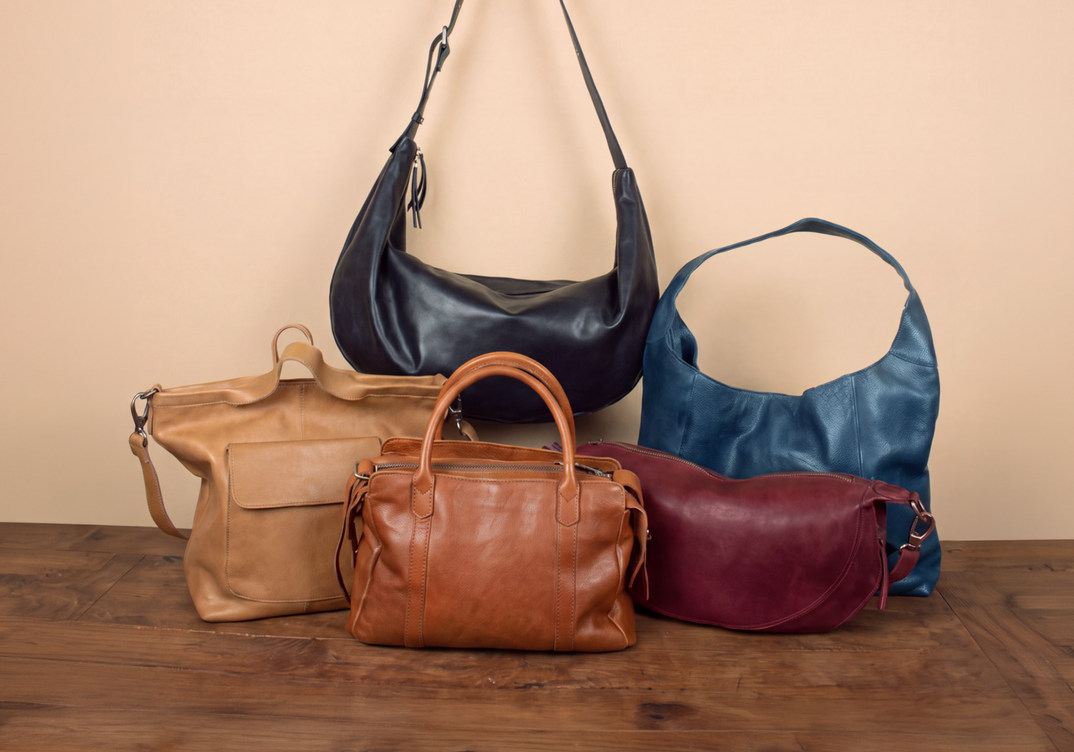
Latico Leathers' Callie pairs buttery-soft full-grain leather with card slots and pen holders. Choose a crossbody shape by its opening, interior organization and supported carrying positions rather than the style name alone.
Source article by Ben Schreiber. Adapted for Latico Leathers. Narration generated with AI voice synthesis using the approved Latico Leathers narrator pair. Product details checked against the live store on November 10, 2026.
Full video transcript
Which type of crossbody bag should you choose?
Buttery-soft leather and useful pockets are a good starting point. Latico Leathers' Callie sling pairs full-grain leather with card slots and pen holders, but its carrying options tell you something different about the bag. A crossbody is defined by the strap worn across the body. Its shape can be flat, curved, structured or pouch-like, so a sling and a messenger can both be crossbody bags while carrying very differently. Start with the shape you like, then check the opening, pockets and strap. A familiar style name cannot tell you whether your phone fits or whether the strap adjusts to a comfortable position. Style names can overlap. The product details decide how a particular bag can be worn. A compact crossbody is a useful place to begin if your usual carry is a phone, wallet and keys. A flat rectangular body may suit someone who likes separate pockets. A deeper pouch may suit someone whose essentials are less neatly stackable. Look at the opening as carefully as the exterior. A wide phone can be awkward to pass through a narrow zip even when the outside measurements look generous. Check the size of the phone with its case, and allow room to reach past it without emptying the bag. Small does not automatically mean organized. Look for a layout that gives the things you reach for a sensible place, rather than assuming that a larger pocket count will help.
How do slings work, and what defines a messenger?
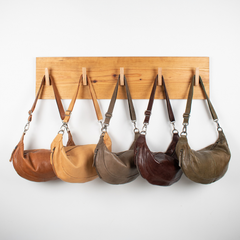
A sling is worth considering if you prefer a bag that follows the torso. Its strap and attachment points matter as much as its outline. A belt bag begins with a waist-pack shape; some can also be worn diagonally. The names overlap in shop descriptions, so check the supported carrying positions on the individual product. For a current Latico Leathers example, Callie has buttery-soft full-grain leather and an interior organizer with card slots and pen holders. Its product details describe sling, crossbody and shoulder carrying options, with an adjustable strap designed for left- or right-side use. That makes Callie a useful example of overlapping categories. It does not mean that every sling converts in the same way, or that a bag pictured across the chest will fit every body at that position. Check the strap instructions before changing attachment points. Keep buckles and adjustment hardware working as intended. A messenger usually has a rectangular body with a flap over its opening. It is a familiar option for people comparing bags for papers or work equipment. The flap is the visual cue; actual carrying capacity still comes from the specific interior. If you need to carry a laptop, compare the device dimensions with the dedicated compartment measurements. Exterior bag dimensions do not prove laptop fit. A product described as a messenger may not have padding or a device compartment at all.
What should you check in satchel, bucket and saddle shapes?
Check how the flap fastens and whether there is a separate zip underneath. A flap that is easy to lift and a zipped main compartment solve different access needs. Neither is a promise against theft. A satchel commonly has a more structured body and may have a top handle. A version supplied with a suitable long strap can also be worn crossbody. Check the actual product rather than treating every top-handle bag as convertible. The top handle can be useful when setting the bag down or picking it up. For longer carrying, look at the strap's adjustment range, attachment points and the loaded weight. A bag's shape alone cannot establish comfort. A tote with a long strap is still a tote-style crossbody. There is no need to call it a satchel to make the same practical comparison. A bucket shape gives the bag an upright, pouch-like outline. Its depth may appeal if you carry items that do not sit flat, but check how the opening closes and how you would reach small things at the bottom. Some designs use a drawstring, others a zip or snap. The name does not guarantee a particular closure. A saddle shape has a rounded lower edge and often a front flap. The curve is a visual preference, not a measurement of capacity. Look inside the flap and check the pocket layout before deciding whether that outline works for your daily carry.
How do convertible straps and carrying options work?
Bucket and saddle styles can have a long crossbody strap. Neither shape guarantees that the strap detaches or shortens for shoulder wear. A convertible bag offers carrying options specified by its maker, such as shoulder and crossbody wear or top handles plus a long strap. It is useful if your day includes different settings, provided you like the bag in the position you will use most. Check what comes with it. Separate short and long straps work differently from a single adjustable strap. Do not knot, double or reattach a strap unless the product's instructions support that method. Put your everyday items together before comparing bags. Check the bulkiest item first, then the things you reach for while the bag is on your body. Consider whether you prefer a visible zip, a flap or a drawstring, and whether you want small items separated. Compare published dimensions carefully. Exterior measurements describe the outside of the bag, so check the opening and usable interior before assuming an item will fit. For carrying positions, follow the individual bag's strap instructions. A sling can be worn crossbody when its strap and attachment design support that position. Check the individual bag's instructions. The terms describe related features, so they are not always mutually exclusive labels. A shoulder bag can also be worn crossbody if it has a suitable long strap and the maker supports crossbody wear. A short shoulder strap alone does not establish that option.
How do you check device fit and choose a travel bag?
A messenger silhouette does not make every messenger a laptop bag. Check for a dedicated compartment and compare its internal measurements with your device. The messenger silhouette alone does not prove fit or protection. Choose around what you need to carry and how you want to access it. Check the closure and pocket arrangement, then try the bag loaded. No silhouette makes a bag theft-proof. Choose a position where the bag and strap feel comfortable when loaded. Strap adjustment and body proportions affect that position; there is no universal height that works for everyone. Keep the visual choice separate from the fit checks. A rounded lower edge, a flap or an upright body can help you recognize the shape you like. The actual opening and pocket layout tell you how you would use that particular bag. Check the strap supplied with it and the carrying positions its maker supports. If you need a laptop or another rigid item to fit, ask about the usable interior instead of relying on the outside dimensions. Read the full crossbody bag guide at laticoleathers.com, then compare the individual product details for the bag that suits your routine.