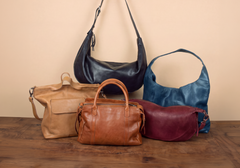
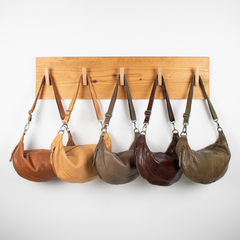
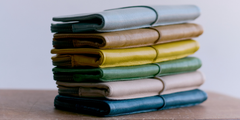
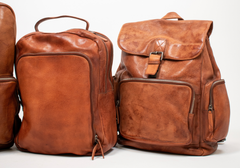
 Cognac
 Black
Black Oat
Oat Bone
Bone Brown
Brown Cafe
Cafe Mocha
Mocha Walnut
 Ruby
Ruby Wine
Wine Charcoal
 Slate
Slate Auburn
 Eggplant
 Oxblood
 Moss
Moss Burgundy
 Aubergine
 Tan
Tan Hazel
Hazel Blush
Blush Camel
Camel Red
Red Orange
 Natural
 Burnt Orange
 Poppy
Poppy Plum
Plum Rosa
Rosa White
White Grey
Grey Cobra
Cobra Denim
Denim Indigo
 Emerald
 Teal
Teal Turquoise
 Sky Blue
 Grass
Grass Green
Green Olive
Olive Yellow
 Lemon
Lemon Honey
Honey Chartreuse
 Mustard
 Lavender
 Mint
Mint Foil Burgundy
 Foil Cream
 Foil Cobra
 Foil Desert Trail
 Foil Black
 Foil Sea Glass
 Foil Turquoise
 Foil Sunflower
 Foil Brown
 Foil Chartreuse
 Foil Red
 Foil Berry
 Foil Purple
 Foil Steel
 Foil Teal
 Hair On Black
 Hair On Brown
Fast Fashion Statistics: Growth, Waste, and Consumer Trends
Most people own more clothes than they wear.
That gap — between what fills our wardrobes and what actually gets used — is one of the defining features of modern fashion consumption.
It is a trend that has been building for decades, driven by falling prices, faster production cycles, and a retail environment that has made buying new clothing easier and cheaper than ever before.
This report draws on publicly available apparel lifecycle research, consumer behavior data, and resale market insights to examine how fashion consumption has changed, how often garments are actually worn, and what that means for how long items remain in use before being discarded, resold, or replaced.

Key Highlights
-
The average person owns 118 clothing items — with 26% left unworn in the past year
-
That equates to roughly 31 unused items sitting in the average wardrobe
-
Global clothing utilization has declined by 36% over the past 15 years
-
Clothing production has approximately doubled since 2000, despite falling utilization rates
-
In the U.S., clothing is worn for only around 25% of the global average
-
Some garments are discarded after just 7–10 wears
-
21% of women and 15% of men in the U.S. say they regularly buy clothes they never wear
-
40% of Americans say they want to reduce — or have recently reduced — the size of their wardrobe
-
Consumers attempt to resell approximately 27% of unwanted clothing
-
The global secondhand apparel market is projected to reach $393 billion by 2030
-
77% of consumers use handbags weekly or more — and 42% use them daily
People Own More Clothes Than Ever — But Wear Less of Them
WRAP clothing ownership research found that the average person now owns approximately 118 clothing items.
That is a significant number by any measure — but what makes it more striking is how much of it goes unused.
Around 26% of those items went unworn in the past year.
For the average person, that translates to roughly 31 clothing items sitting in a wardrobe, untouched, for twelve months or more.
To put that in perspective: nearly a third of the average wardrobe is essentially inactive at any given time.
Ownership levels have clearly outpaced practical usage — and the gap between the two continues to grow.
Utilization Has Fallen as Production Has Risen
The trend becomes sharper when you look at how frequently garments are worn over time.
According to Ellen MacArthur Foundation research, global clothing utilization — the average number of times a garment is worn before it stops being used — has declined by approximately 36% over the past 15 years.
Over that same period, clothing production has approximately doubled since 2000.
More garments are being made. More garments are being bought. But each individual item is being worn less than ever.
The result is a fashion system producing at record volume while delivering diminishing returns in terms of actual use — a pattern that is increasingly difficult to ignore at both an industry and consumer level.
The U.S. Is One of the Lowest-Utilization Markets in the World
Among developed markets, the United States stands out for particularly low clothing usage rates.
Ellen MacArthur Foundation analysis estimates that clothing in the U.S. is worn for only around 25% of the global average.
Some garments are discarded after as few as 7–10 wears.
That is not a worn-out item being replaced — it is a barely-used one being discarded.
The U.S. apparel market is heavily shaped by high-volume purchasing and short garment usage cycles, making it one of the most extreme examples of the broader global trend.
For context, a garment worn just seven times before disposal represents a fraction of the use most people would consider reasonable — and yet for a portion of the market, this has become entirely normal.
Consumers Know It Too
This is not just an industry-level observation. Many consumers recognize it in their own behavior.
U.S. survey data found that 21% of women and 15% of men say they regularly buy clothes they never wear.
40% of Americans say they want to reduce — or have already started to reduce — the size of their wardrobe.
The awareness is there. For a growing number of shoppers, it is translating into a genuine shift in how they think about what they buy and why.
This tension — between habitual purchasing behavior and a growing desire to consume more intentionally — is one of the more significant undercurrents shaping the fashion market right now. Consumers are not unaware of the problem. Many are actively looking for a way out of it.
Resale Markets Are Growing Rapidly
As wardrobes fill up and utilization falls, secondary markets have expanded to absorb the overflow.
ThredUp resale market data indicates that consumers now attempt to resell approximately 27% of unwanted clothing.
The global secondhand apparel market is projected to reach approximately $393 billion by 2030.
That growth is not purely driven by sustainability values — it is also a practical response to the volume of lightly used or unused clothing that passes through modern wardrobes.
The resale boom is, in many ways, a direct consequence of overconsumption.
Accessories Behave Differently
Not every fashion category follows the same pattern.
Grand View Research consumer data suggests that handbags function as notably high-utilization fashion items compared to most apparel categories.
77% of consumers use handbags weekly or more.
42% use them daily.
Handbag purchases also tend to be more planned and less frequent than typical apparel purchases — reflecting a different relationship between buyer and product.
Where clothing is often bought impulsively and worn infrequently, accessories like handbags are chosen more deliberately and used far more consistently.
This distinction matters. It suggests that when consumers invest more consideration into a purchase — when they choose something with intention rather than convenience — usage rates reflect that. The item becomes part of a daily routine rather than a wardrobe footnote.
What the Data Points To
Taken together, the data describes a fashion market defined by volume, speed, and underuse.
Ownership is high. Utilization is low. Lifespans are short. And consumers are increasingly aware of the imbalance.
The resale market's rapid growth is one symptom of this. So is the 40% of Americans actively looking to downsize their wardrobes. These are not isolated data points — they are signals of a broader recalibration happening in how people relate to the things they own.
At the same time, the accessories data offers a meaningful counterpoint — a category where purchasing tends to be more considered, usage rates are higher, and items remain in active rotation rather than sitting unused.
For shoppers rethinking their relationship with fashion, the shift is not necessarily about buying less across the board. It is about buying better — choosing fewer, more deliberate purchases that actually get used, that hold up over time, and that justify their place in a wardrobe rather than quietly occupying it.
The data suggests that appetite for that kind of ownership is growing. The question for the fashion industry is whether it can meet consumers where that mindset is heading.
Methodology
This research aggregates publicly available data from apparel industry reports, NGO research, consumer surveys, and resale market analyses related to clothing ownership, utilization, lifespan, and secondary market behavior.
No original surveys or proprietary data collection methods were used. Priority was given to widely cited industry and research sources with measurable statistics relevant to fashion consumption patterns.