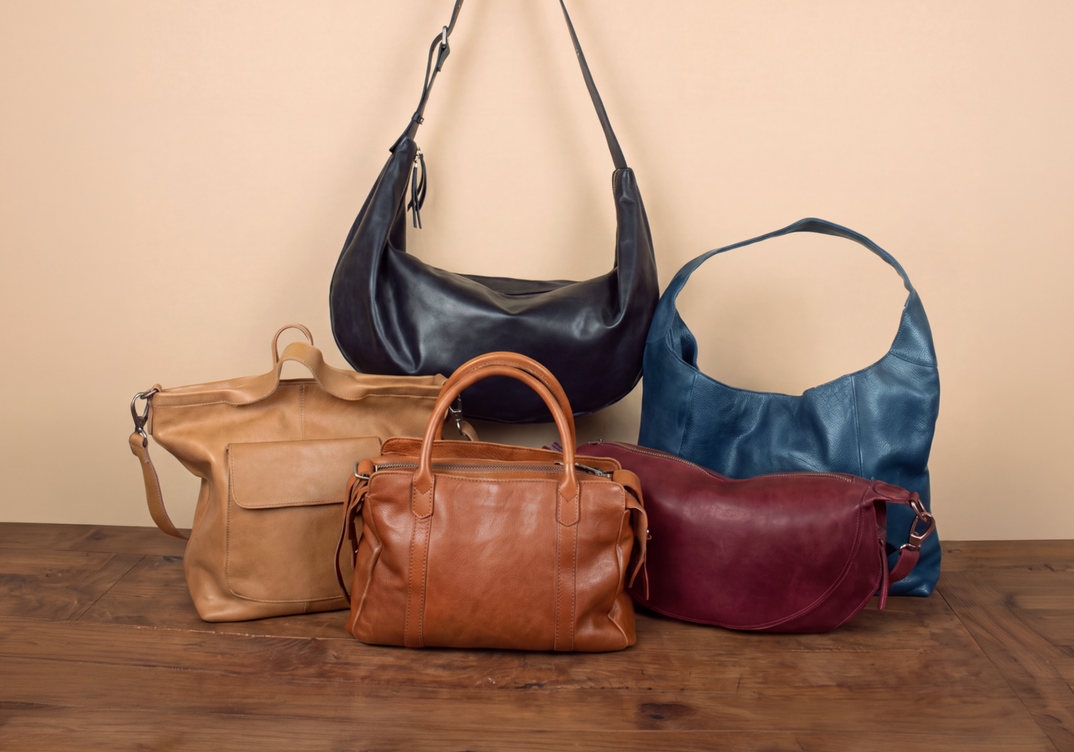
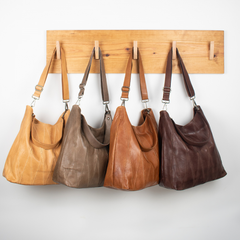
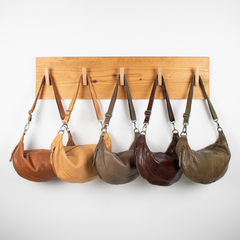
 Cognac
 Black
Black Oat
Oat Bone
Bone Brown
Brown Cafe
Cafe Mocha
Mocha Walnut
 Ruby
Ruby Wine
Wine Charcoal
 Slate
Slate Auburn
 Eggplant
 Oxblood
 Moss
Moss Burgundy
 Aubergine
 Tan
Tan Hazel
Hazel Blush
Blush Camel
Camel Red
Red Orange
 Natural
 Burnt Orange
 Poppy
Poppy Plum
Plum Rosa
Rosa White
White Grey
Grey Cobra
Cobra Denim
Denim Indigo
 Emerald
 Teal
Teal Turquoise
 Sky Blue
 Grass
Grass Green
Green Olive
Olive Yellow
 Lemon
Lemon Honey
Honey Chartreuse
 Mustard
 Lavender
 Mint
Mint Foil Burgundy
 Foil Cream
 Foil Cobra
 Foil Desert Trail
 Foil Black
 Foil Sea Glass
 Foil Turquoise
 Foil Sunflower
 Foil Brown
 Foil Chartreuse
 Foil Red
 Foil Berry
 Foil Purple
 Foil Steel
 Foil Teal
 Hair On Black
 Hair On Brown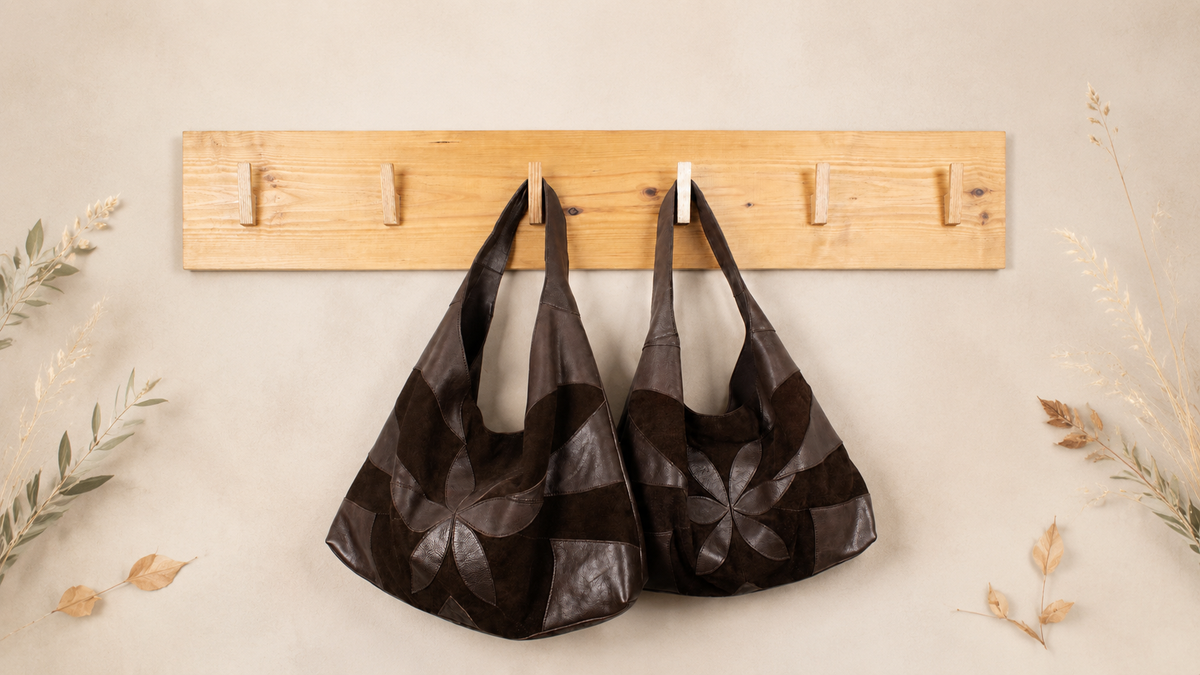
How to Clean a Suede Bag: Step-by-Step Care Guide
A suede bag has a texture nothing else in your closet can match: a soft, velvety nap that shifts tone as it catches the light. A few simple habits keep that texture looking the way it did the day the bag arrived.
Most of the routine takes minutes and needs little more than a brush. This guide walks through the full sequence, the tools that do the real work, and the right first move for every common mark.
It's timed well, too. Our fall collection lands with suede in the lineup this season, led by the Lindsey Suede, a slouchy silhouette in the family of our hobo style bags. Build the habit now and the bag stays gorgeous for years.

How to Clean a Suede Bag: Step by Step
The full routine runs in this order:
-
Empty the bag and stuff it with tissue paper so the panels stay taut
-
Dry brush the entire surface with a suede brush
-
Erase dry marks and scuffs with a suede eraser
-
Treat the specific stain using the stain-by-stain guide below
-
Re-brush the nap once the bag is fully dry
Two rules sit above every step: brush in one direction, and never saturate suede with water. Keep those two and the rest of the routine is forgiving.
Before you pick up a tool, answer one question: what kind of mark is this? Dry dirt, a water ring, oil, ink, salt, and mud each call for a different first move, and light suede takes a gentler approach than dark.
Suede is cut from the underside of the hide, then buffed to raise its signature nap, which is why it absorbs rather than repels. For the full story of the material, our guide to what suede leather is goes deeper.
This routine restores the nap's texture and color. Dye transfer across a full panel or long-set oil on light suede belongs with a leather specialist, and we cover when to make that call further down.
Your Suede Care Kit: What Each Tool Does
A small kit handles nearly everything a suede handbag encounters. Here's what belongs in it and the job each piece does.
|
Tool |
What it does |
Good to know |
|
Suede brush (brass or nylon bristles) |
Lifts compacted nap and worked-in dirt |
Too firm for a light dusting; save it for matted spots |
|
Rubber crepe brush |
Sweeps surface dust off the nap |
Too soft to revive flattened nap; that's the bristle brush's job |
|
Suede eraser (crepe block) |
Rubs out dry scuffs and shiny spots; crumbles as it works |
Also sold as an art gum eraser |
|
Microfiber cloth, white only |
Blotting and damp cleaning |
Colored cloths can transfer dye into damp nap, so keep it white |
|
Cornstarch or talcum powder |
Draws fresh oil up out of the fibers |
Baking soda works for odor duty too |
|
White vinegar or suede cleaner foam |
Lifts water-based marks and salt |
Vinegar evaporates cleanly, so it leaves no ring of its own |
|
Protector spray |
Adds a water-repellent shield |
Fluoropolymer formulas preserve texture; silicone can flatten the nap |
|
Tissue paper or a purse pillow |
Holds the bag's shape while it dries |
A slack panel creases as it dries, so keep it filled |
Just as useful is knowing what stays in the cabinet: water immersion, dish soap, saddle soap, standard leather conditioner, baby wipes, magic erasers, and hair dryers. Each one either flattens the nap, darkens the dye, or drives moisture where it shouldn't go.

Prep Before You Touch the Suede
Start inside. Empty every pocket, turn the lining out, and brush away crumbs and grit. Grit ground into the nap during cleaning is one of the most common causes of permanent shine, so this step earns its two minutes.
Stuff the bag with tissue paper until the panels sit taut. A firm panel brushes evenly and dries without creasing.
Patch-test every product before it touches a visible panel. The base of the bag or an interior seam works well as the hidden area. Let the spot dry completely before judging any color shift, since damp suede always reads darker.
Finally, tape off hardware and any smooth-leather trim, or plan to work around them. Zippers and clasps get cleaned around, never over.
Dry Cleaning First: Brushing and Erasing
Most bags that look dirty only need the dry pass. Dust, surface grime, and friction marks all come out before any liquid enters the picture, so always run this stage first.
Brushing technique matters more than the brush. Use light pressure and short strokes in one direction only, working panel by panel. If the nap starts to look slick rather than lifted, you're pressing too hard. Ease off and let the bristles do the work.
The suede eraser handles scuffs and shiny wear points: handle edges, base corners, the fold of a flap. Rub in short strokes, brush away the crumbs, and re-brush the nap.
Matted or shiny patches respond to a three-step revival. Erase first, brush against the grain to lift the fibers, then brush back in one uniform direction so light reflects evenly across the panel.
For hardened shine that resists the eraser, a fine emery board is the last resort. Use the lightest possible touch, because sanding removes nap that doesn't grow back.
Removing Specific Stains From Suede
Once the dry pass is done, treat whatever remains by type. Each fix below is short, and each has a clear stopping point.
Water Marks and Rings
Counterintuitively, the fix for a water ring is more water, applied evenly. Lightly dampen the entire panel with a white microfiber cloth so there's no tide line, then blot. Spot-treating just the ring creates a new ring at the new edge.
Stuff the bag, let it air dry at room temperature away from heat, then re-brush the nap. Stop and reassess if the mark darkens after two rounds.
Oil and Grease
Move fast. Cover the spot with cornstarch or talcum powder and leave it for 4 to 12 hours while it draws the oil up. Brush the powder out and repeat before trying anything stronger.
For oil that has already set, the escalation path lives in our guide to getting oil stains out of leather.
Ink
Blot, don't rub. Rubbing pushes pigment deeper into the fibers, and a pen mark on nap is the toughest mark suede takes. After blotting, follow the method in our ink removal guide rather than improvising.
Mud and Dirt
Let mud dry completely before touching it. Wet mud pushes pigment into the nap; dry mud flakes off. Once it's fully dry, break off what you can and brush out the rest in one direction.
Salt and Winter Residue
Dampen a white cloth with diluted white vinegar and wipe the whole panel evenly, not just the salt line. Air dry, then re-brush. The vinegar lifts the mineral residue and evaporates without leaving a mark of its own.
Makeup, Food, and Other Spot Marks
The shared principle is blot, then dry-treat. Blot anything wet with a white cloth, let the spot dry fully, then erase and brush. Powder handles the oily half of a makeup mark; the eraser handles the pigment left behind.
Mold, Mildew, and Odor
Brush mold off outdoors, then fix the storage humidity that invited it, or it returns. Our mold removal guide covers the treatment itself.
For lingering odor, set an open box of baking soda inside a larger bag or bin with the purse. Never apply powder directly to the nap for odor work.
Quick Reference: Stain-by-Stain
|
Mark |
First move |
Tool |
Dry time |
Call a professional when |
|
Dry dirt, dust |
Brush in one direction |
Suede brush |
None |
Rarely needed |
|
Scuffs, shiny spots |
Erase, then re-brush |
Suede eraser |
None |
Nap is worn through |
|
Water ring |
Dampen the whole panel evenly, blot |
White microfiber cloth |
Overnight |
Ring survives two rounds |
|
Oil, grease |
Powder immediately |
Cornstarch or talc |
4–12 hours |
Set-in oil on light suede |
|
Ink |
Blot only |
White cloth |
Varies |
Almost always, if blotting doesn't lift it |
|
Mud |
Let dry fully, then flake and brush |
Suede brush |
Until bone dry |
Pigment remains after brushing |
|
Salt |
Wipe panel evenly |
Diluted white vinegar |
A few hours |
Repeated rounds don't lift it |
|
Mold |
Brush off outdoors |
Suede brush |
N/A |
Odor or spotting persists |
Light Suede vs. Dark Suede
Color decides what shows. Light suede in cream, tan, or taupe reveals oil and dye transfer first; dark suede in chocolate or black shows water rings and winter salt. Knowing your bag's tendency tells you which habit matters most.
On pale nap, prevention does the heavy lifting. Dark denim against a cream bag is the classic dye-transfer pairing, so a protector spray and a little wardrobe awareness go a long way.

Pale suede also responds differently to treatment. Vinegar can read darker on light nap and powders can leave a faint cast, which is why the patch test is non-negotiable on lighter bags.
Rich brown suede, like the Stevie Suede crossbody, sits in the forgiving middle: deep enough to hide everyday dust, saturated enough that even treatment blends invisibly. It's the same reason brown leather bags make such easy everyday companions. For a refresher on the material itself, our glossary entry on suede has the quick version.
Protecting and Storing a Suede Bag
Protection is where ten minutes buys you a season. These habits keep the nap plush between cleanings.
Protector Spray
Apply in light, even passes from 6 to 8 inches away, and give it 24 hours to cure before the bag goes out. Re-brush the nap after curing, and reapply after every deep clean or every few months of regular carry.
A small piece is the easiest place to build the habit. You can spray, cure, and re-brush the Eloise Suede wallet in minutes, and the routine transfers straight to your bags.
Rain and Snow
Caught in weather, blot, don't wipe, the moment you're inside. For a crossbody that's out in the world with you daily, like the James Suede, the quick response is the habit that matters most.
Dry at room temperature with good air circulation. No radiators, no direct sun, no hair dryer. Once fully dry, a quick brush restores the nap's direction.
Storage
Store suede in a breathable dust bag, never plastic, stuffed with tissue to hold its shape. Keep it upright, off the floor, in stable humidity, with straps unbuckled so they don't crease.
The same principles that protect smooth leather apply here, and our guide to storing leather bags covers them in full.
Rotation and Wear Points
Every bag develops character first at its contact points: base corners, handle grips, the fold of a flap. On a carry-everything tote like the Tanya Suede, the handles and base do the most work, the same points to watch across our leather totes.
Rotation spreads that wear. Pairing the Lindsey Suede with the Petite Lindsey Suede means each bag rests while the other carries, and both stay plush longer.

Suede belongs to the cooler months, which gives it a natural rhythm. A bag like the Darby Suede earns a fresh brush and a coat of protector before its first fall outing, and a final clean before it goes into the dust bag come spring.
When Suede Needs a Professional
A few situations skip the home routine entirely: dye transfer across a full panel, old oil on light suede, structural water damage, torn nap, or an odor living in the lining.
A leather specialist can re-dye panels, re-raise nap, and treat the lining. What they can't do is regrow nap that's worn through, so weigh the quote against the bag's value and age before committing.
Vetting is one question: do you treat suede separately from smooth leather? A general dry cleaner is set up for fabric. You want a specialist who answers yes without hesitating.
Suede Care vs. Smooth Leather Care
If you own both, the trap is running one routine on two materials. They want nearly opposite care.
We've built our reputation on full-grain leather, and our published standard for it is conditioning and buffing: feed the hide, polish the grain, let it develop a patina. That exact routine is what suede's do-not-use list exists to prevent. Conditioner mats and darkens nap; brushing replaces buffing entirely.
Water splits the same way. A damp cloth is routine on finished full-grain and a measured, whole-panel technique on suede.
Nubuck sits between the two. It's sanded from the grain side rather than split from the underside, so it carries a finer nap on stronger fibers and tolerates slightly firmer brushing than suede.
For the smooth-leather half of your collection, our leather conditioner guide covers that routine, and the fall collection shows both materials side by side this season.
Ten Minutes a Month Keeps the Nap Velvety
Suede care comes down to a short list: brush in one direction, keep water measured, treat marks by type, and store the bag stuffed and breathing. Run the dry pass monthly, deep clean each season, and re-spray after every deep clean.
Build the routine once and it becomes automatic, which is exactly what a bag you plan to carry for years deserves.