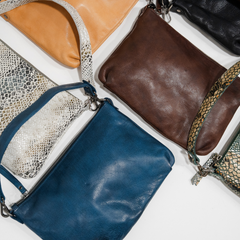
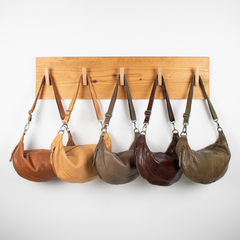

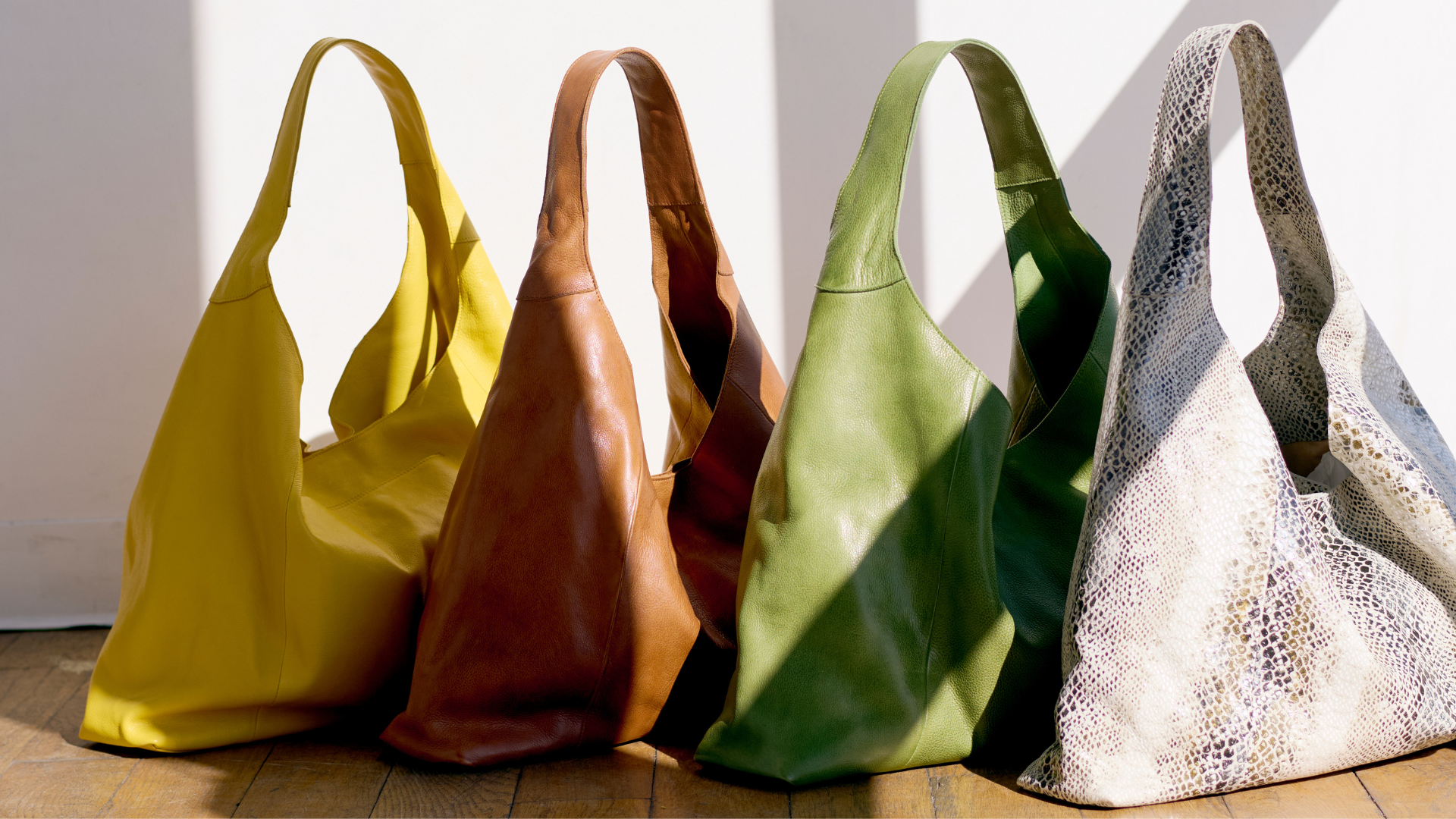
 Cognac
 Black
Black Oat
Oat Bone
Bone Brown
Brown Cafe
Cafe Mocha
Mocha Walnut
 Ruby
Ruby Wine
Wine Charcoal
 Slate
Slate Auburn
 Eggplant
 Oxblood
 Moss
Moss Burgundy
 Aubergine
 Tan
Tan Hazel
Hazel Blush
Blush Camel
Camel Red
Red Orange
 Natural
 Burnt Orange
 Poppy
Poppy Plum
Plum Rosa
Rosa White
White Grey
Grey Cobra
Cobra Denim
Denim Indigo
 Emerald
 Teal
Teal Turquoise
 Sky Blue
 Grass
Grass Green
Green Olive
Olive Yellow
 Lemon
Lemon Honey
Honey Chartreuse
 Mustard
 Lavender
 Mint
Mint Foil Burgundy
 Foil Cream
 Foil Cobra
 Foil Desert Trail
 Foil Black
 Foil Sea Glass
 Foil Turquoise
 Foil Sunflower
 Foil Brown
 Foil Chartreuse
 Foil Red
 Foil Berry
 Foil Purple
 Foil Steel
 Foil Teal
 Hair On Black
 Hair On Brown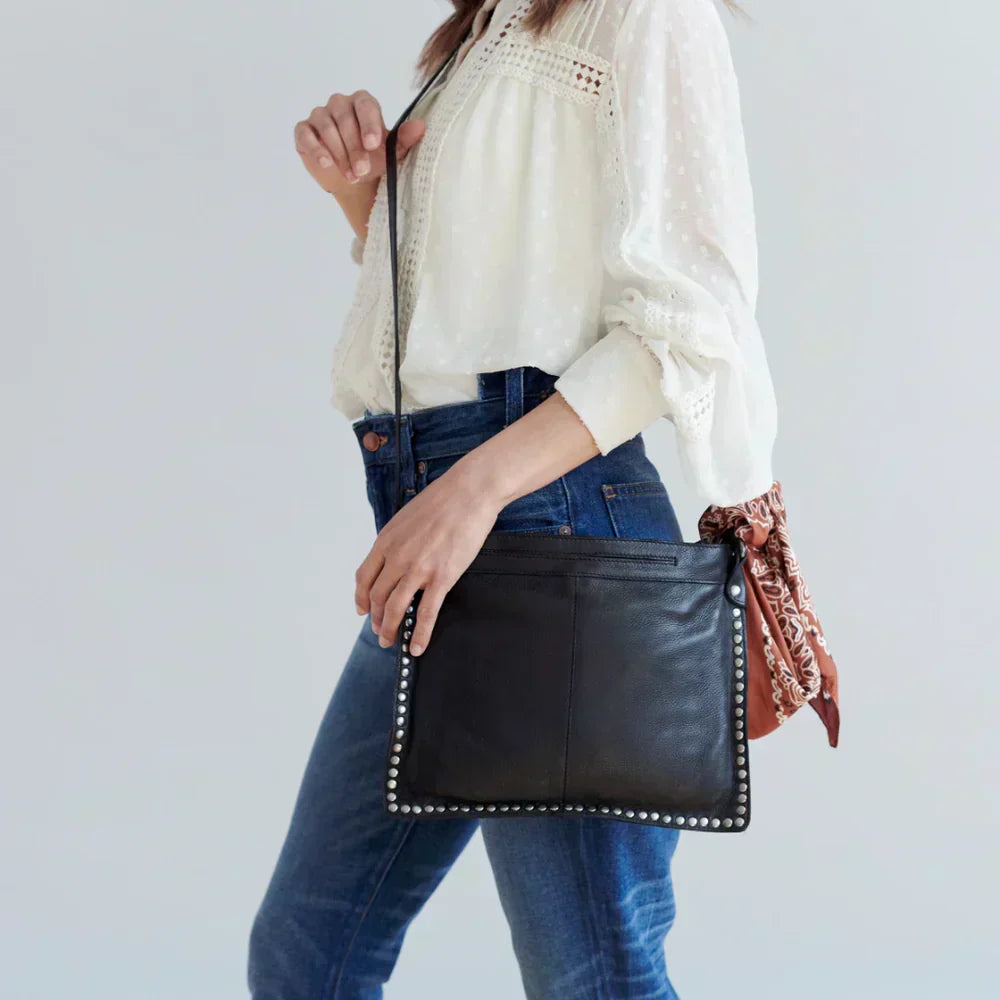
How to Choose the Right Size Crossbody Bag
Picture your usual Saturday: coffee in one hand, phone in the other, a quick errand run that turns into lunch with a friend. The bag that keeps up with all of that is rarely the one you fell for online because it looked cute on a model.
The right size crossbody bag is the one that fits your day, your frame, and what you carry.
That last part trips up most shoppers. People reach for a number, when size is really three things at once: how the bag measures, how much it holds, and how it reads against your body.
Get those three working together and the right crossbody almost picks itself. Our leather crossbody bags span the full range of sizes, so the goal here is helping you land on yours.
Crossbody Bag Sizes Explained
"Size" gets used loosely, so it helps to split it into three things buyers usually blur together. External dimensions are the height, width, and depth of the bag itself, given in inches and centimeters. Internal capacity is how much fits once you account for pockets and structure. Visual proportion is how large the bag looks on you.
A bag can be small in dimension but deep in capacity, or large on paper yet awkward on a petite frame. Holding all three in view is what separates a guess from a good fit.
Most crossbodies fall into rough tiers.
-
Micro and mini styles run small enough for a phone and a card or two.
-
Small bags handle daily essentials.
-
Medium bags carry a bit more without bulking up.
These tiers give us shared vocabulary for the rest of this guide. The "right" size is where three things meet: your body proportion, what you carry, and the occasion. There is no universal number, which is exactly why a friend's perfect bag may feel wrong on you.
Match Bag Size to Your Body Proportions
Bag size should relate to your frame and torso length, not taste alone. The same crossbody can look balanced on one person and overwhelming on another. The principle is proportion: a bag reads in relation to the body carrying it.
Here is a quick self-check. Hold the bag against your torso and note where it lands, whether that's your rib, your waist, or your hip. Then notice how it divides your body visually. A bag that cuts you at the widest point draws the eye there. One that sits higher or lower lengthens the line.
1) Petite and Shorter Torsos
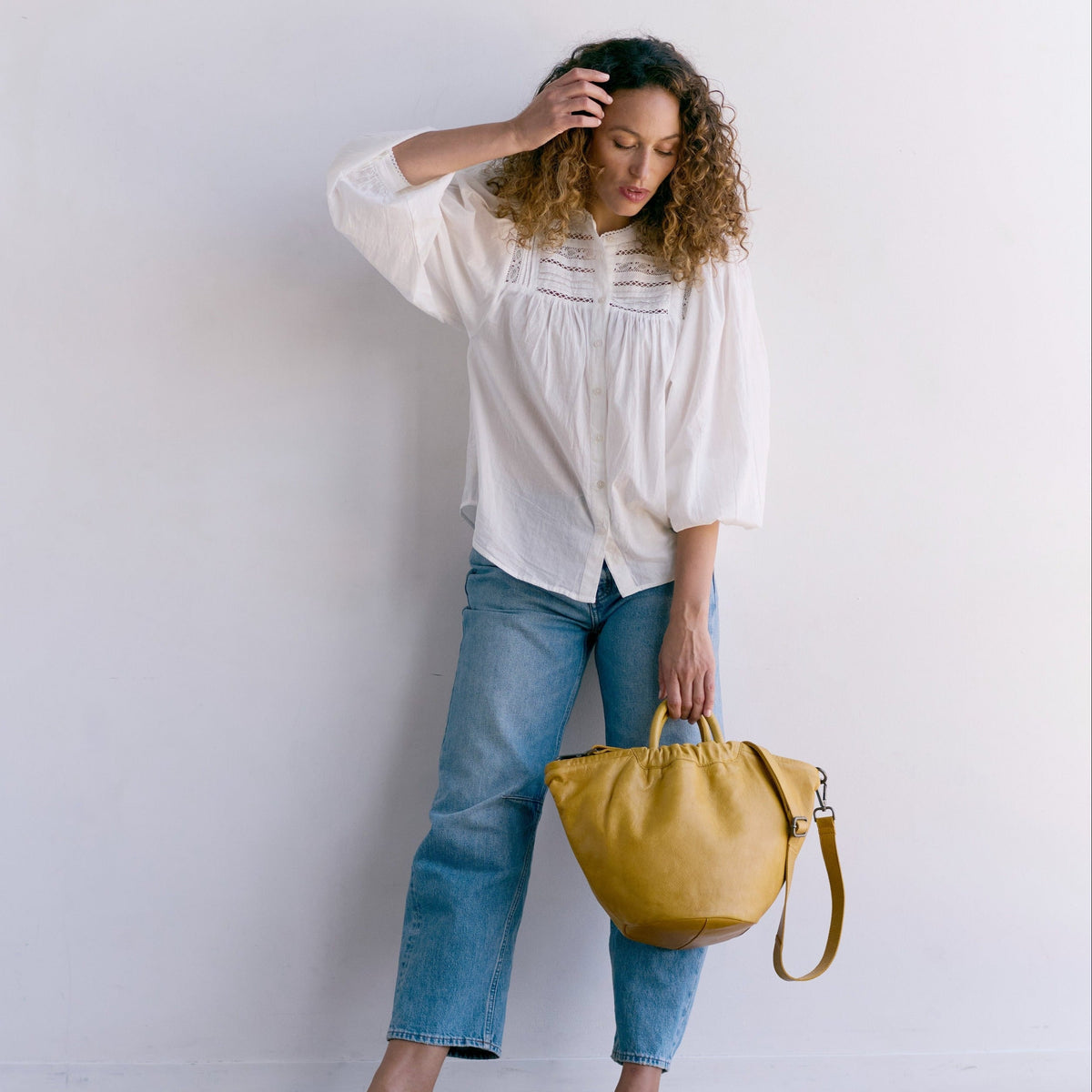
On a smaller frame, an oversized bag swallows the silhouette and shortens it further. Mini-to-small styles with a shorter strap drop keep the proportion clean. A compact bag that sits at the natural waist elongates rather than divides. If you fall in the 5'0" to 5'3" range, this is the single biggest lever you have.
2) Average and Taller Frames
A longer torso can carry more bags. Medium-to-large styles balance the vertical line, where a tiny bag can read too dainty and leave the proportion looking unfinished. Taller frames have room to let a bag sit lower without throwing off balance.
3) Curvier Frames and Strap-Line Considerations
For hourglass, pear, and plus-size frames, strap placement matters as much as bag size. A strap that crosses at the bust or hip draws a horizontal line across the widest point.
Wearing the bag slightly higher or letting it rest at the hip below the curve keeps the line moving vertically. The bag itself can stay the same. The strap drop is what you adjust.
Match Size to How You'll Actually Use It
Use case is the single biggest practical driver of size, more than any styling rule. The honest question is what you carry on a normal day, not what you imagine carrying. Walk through your real scenarios and the right tier reveals itself.

1) Everyday and Errands
A typical daily carry is modest: phone, cardholder, keys, lip balm, maybe sunglasses. That points to a small or medium crossbody. The Bianca sits in that everyday small-to-medium range, with enough room for essentials plus a few extras without turning into a bag you have to dig through.

2) Work, Commute, and Tech
The moment a tablet, charger, or notebook enters the picture, you need a medium or utility size. The Coast leather crossbody bag shows the trade-off clearly: more capacity for the commute, a little more weight to carry. That trade is worth making when the bag works hard across a full workday.
3) Travel and Hands-Free Days
Transit, parks, and sightseeing reward a slightly larger, secure crossbody worn across the body. You want hands free, weight distributed evenly, and a bag that closes properly in a crowd. The Coast also works here, and for a deeper dive our guide on choosing the right crossbody bag for travel covers what to prioritize on the road.

4) Evening and Going Out
Evenings ask you to carry less, and a micro or mini crossbody enforces that discipline. The Halo leather crossbody holds a phone, a card, and a lipstick, which is most of what a dinner or wedding requires. Carrying less is the point of the format.
What Actually Fits Inside Each Size
Dimensions are abstract until you translate them into what fits. Here is a rough map by tier:
-
Micro/mini (essentials only): phone, one or two cards, key, lip balm
-
Small (essentials plus extras): phone, slim wallet, keys, sunglasses, a few small items
-
Medium (light day bag): the above plus a small notebook, charger, or pouch
-
Large/utility (full day loadout): tablet, water bottle, folder, the full kit
Phone size is the hidden variable here. A larger phone changes which "small" bags work, so measure your phone against a bag's opening before you trust the label.
Interior layout matters as much as raw size. Slip pockets, zip pockets, and a center divider multiply usable capacity at the same external dimensions. Our compartment crossbody bags show how organization changes what a bag holds: two styles with identical outer measurements can carry very differently inside.
Strap Length, Drop, and Adjustability
Strap drop is the vertical distance from the top of the strap to the top of the bag when worn. It matters as much as bag size for both fit and comfort, and it's the spec shoppers most often skip. A correctly sized bag on the wrong strap drop will still feel wrong.
Drop length and total strap length are not the same thing, and readers conflate them constantly. Total strap length is the full measurement of the strap end to end. Drop length is how far the bag hangs below your shoulder. The two relate, but you buy on drop.
Usable drops generally run as follows. A higher drop sits the bag at the rib or waist. A mid drop rests on the hip, the most common crossbody position. A longer drop lets the bag sit low or clear a winter coat.
Standard adjustable straps cover roughly 45 to 54 inches (114 to 137 cm) of total length, which spans most heights and layering needs.
Most crossbody straps adjust through one of three mechanisms: a buckle, a slider, or pre-punched holes. An adjustable strap lets you lengthen or shorten the drop as your layers and outfits change.
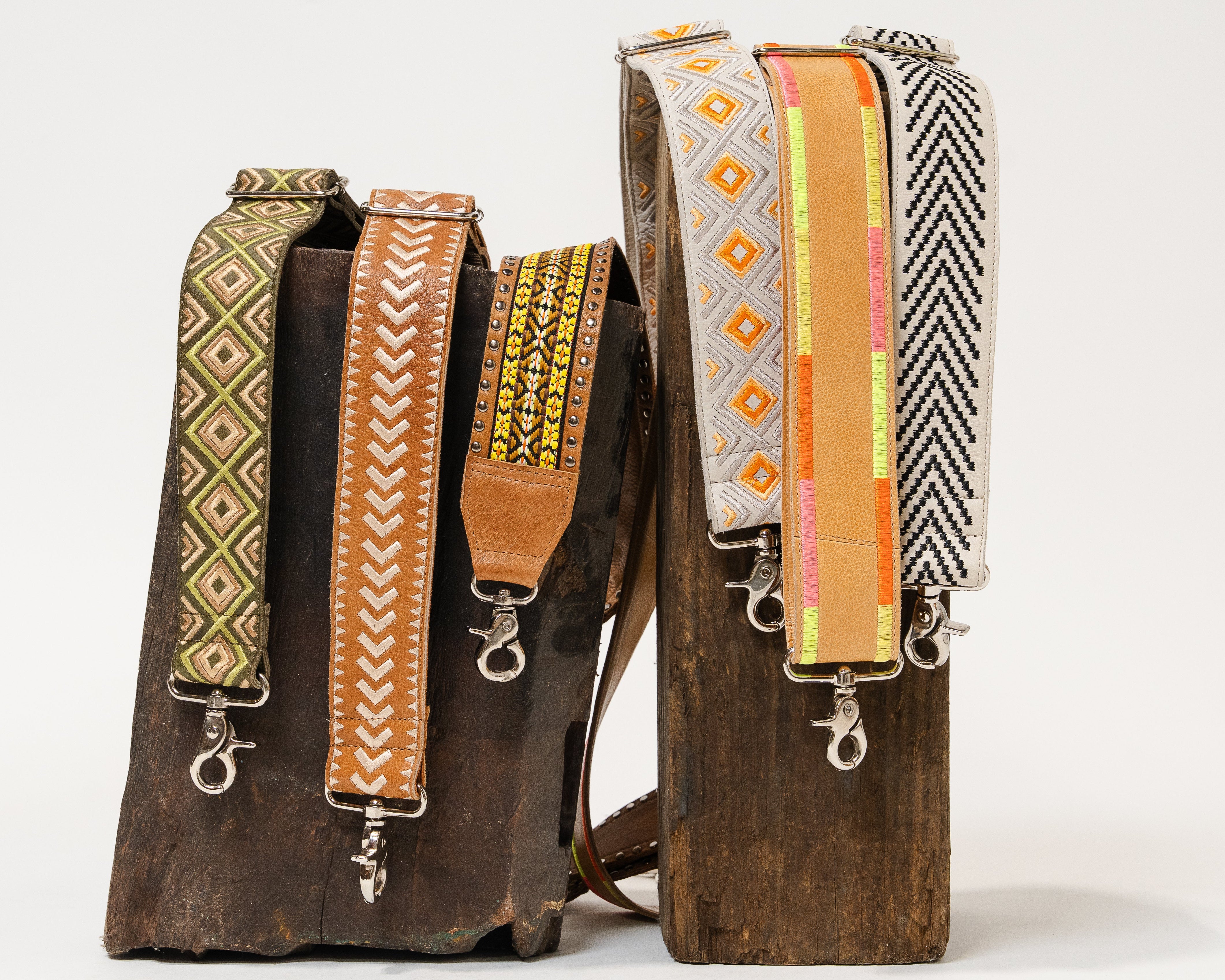
Many of our bags also convert to shoulder wear, and a wider strap distributes weight more evenly to reduce shoulder strain under a heavier load. A swappable leather strap can change both the drop and the look of a bag you already own.
How to Measure Strap Drop at Home
You can verify fit before you buy with a tape measure and a bag you already like. Wear the bag the way you plan to, then measure from the top of your shoulder straight down to the top of the bag.
That number is your target drop. Compare it to a new bag's listed drop and you'll know how it will sit, in inches or centimeters, before it ever ships.
Material and Construction Effects on Size and Feel
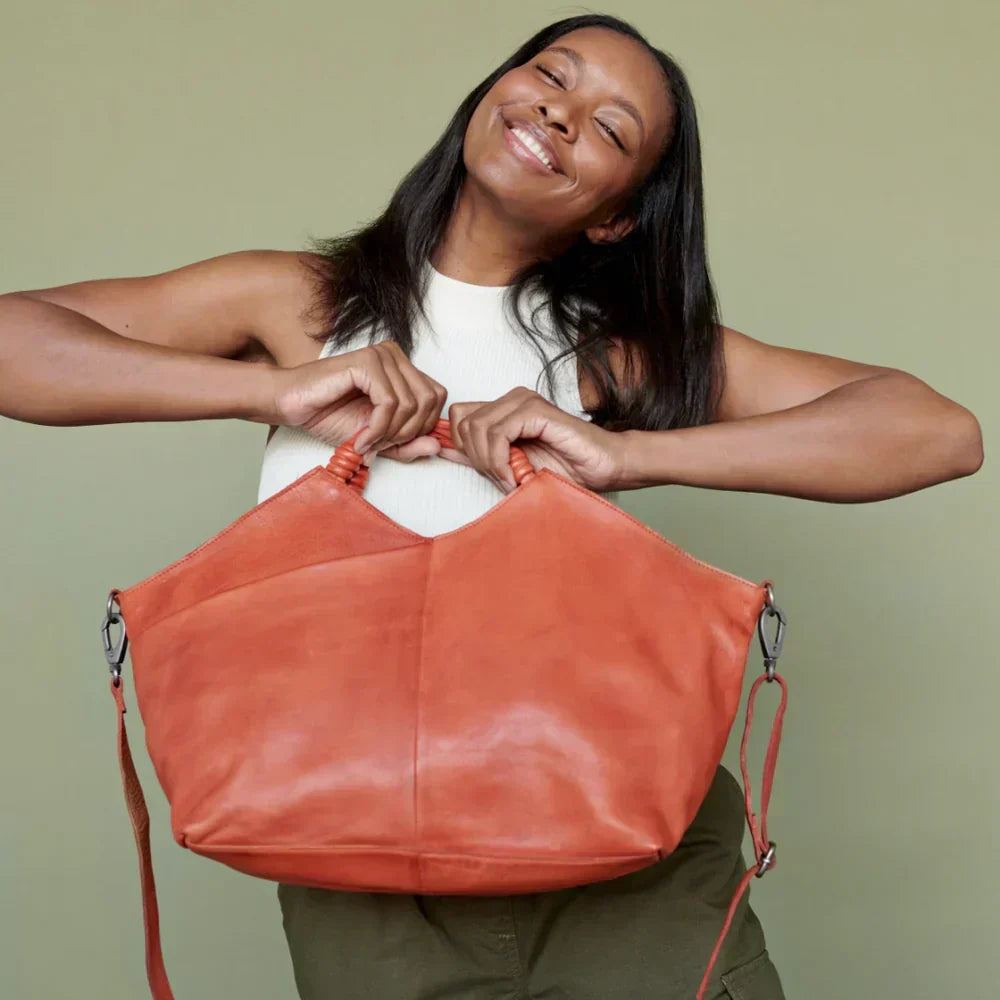
Material changes both perceived size and how a bag behaves. Structured leather holds its shape, protects what's inside, and keeps a clean silhouette. Soft, unstructured leather slouches and expands, which can read smaller at rest and larger once full. Two bags with the same dimensions can feel like different sizes in the hand.
Weight plays in too. The empty weight of a material sets a ceiling on how large you can comfortably go. A dense, sturdy base prevents sagging but adds heft, so utility sizing in heavy leather has a practical upper limit before the load tires your shoulder.
There's a durability angle worth knowing. Structured full-grain leather, the category we work in, holds its silhouette over years of daily carry rather than softening into a slump the way some materials do. That means the size and shape you choose now is roughly the size and shape you keep, which is a fair thing to factor into the decision.
Common Crossbody Sizing Mistakes
A few avoidable errors account for most sizing regret:
-
Buying for an aspirational use case instead of your daily reality
-
Ignoring strap drop and assuming bag size alone determines fit
-
Overweighting the micro-bag trend against what you really carry
-
Confusing external size with internal capacity
-
Forgetting to account for your phone or device dimensions
Putting It Together: A Quick Sizing Framework
Run any bag, ours or anyone's, through the same short sequence:
-
Use case: What will you carry on a normal day?
-
Capacity needed: Which tier holds that without excess?
-
Body proportion: Does the size balance your frame and torso?
-
Strap drop: Will it sit where it flatters and feels right?
-
Material: Structured or soft, and can you carry the weight comfortably?

Walk the Claudia diamond leather crossbody bag through it as an example. A clean small-to-medium structured shape: it covers an everyday-plus-extras loadout, balances most frames, sits at the hip on a mid drop, and keeps its silhouette because the leather is structured. Five checks, one clear answer.
For the wider view, the crossbody bag guide walks through styles beyond size, and once you've landed on a size, how to style a crossbody bag covers wearing it well.
Frequently Asked Questions
What is the most versatile crossbody bag size?
A small-to-medium crossbody is the most versatile for most people. It carries everyday essentials plus a few extras, balances a range of frames, and carries from errands through dinner without looking out of place.
How do I know if a crossbody is too big for me?
Hold it against your torso. If it extends past your hip bones, visually widens your frame, or feels like it's carrying you, it's too big. Petite frames especially should size down and shorten the strap drop.
What size crossbody bag is best for travel?
A medium crossbody worn across the body suits travel best. It holds a phone, documents, and a few essentials, keeps your hands free in crowds, and closes securely. Our travel crossbody guide goes deeper.
Does strap length matter more than bag size?
They matter together. A well-sized bag on the wrong strap drop sits poorly, and the right drop can rescue a bag that's slightly off in size. Check both before you buy, and favor an adjustable strap so you can tune the fit.
Where to Land
The right size crossbody is the intersection of what you carry, how it sits on your frame, and where the strap drops, with material setting how the whole thing holds up over time. Start from your real day, not an aspirational one, and the tier narrows fast.
Run the five-step framework on any bag you're considering and you'll stop guessing at numbers. If you want to see the full range of sizes in one place, browse the crossbody collection and measure a couple of contenders against the bag you already reach for.