
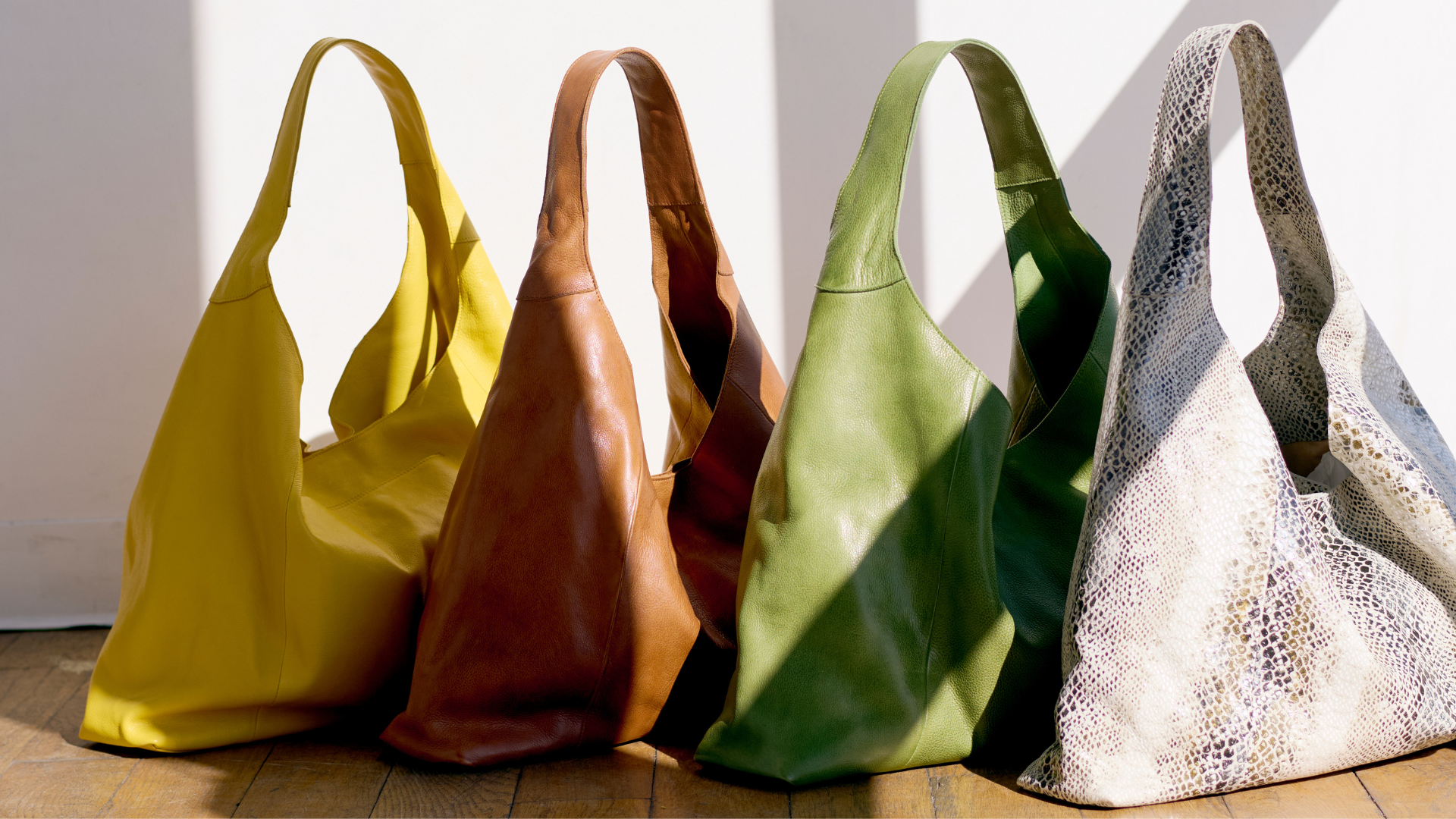
 Cognac
 Black
Black Oat
Oat Bone
Bone Brown
Brown Cafe
Cafe Mocha
Mocha Walnut
 Ruby
Ruby Wine
Wine Charcoal
 Slate
Slate Auburn
 Eggplant
 Oxblood
 Moss
Moss Burgundy
 Aubergine
 Tan
Tan Hazel
Hazel Blush
Blush Camel
Camel Red
Red Orange
 Natural
 Burnt Orange
 Poppy
Poppy Plum
Plum Rosa
Rosa White
White Grey
Grey Cobra
Cobra Denim
Denim Indigo
 Emerald
 Teal
Teal Turquoise
 Sky Blue
 Grass
Grass Green
Green Olive
Olive Yellow
 Lemon
Lemon Honey
Honey Chartreuse
 Mustard
 Lavender
 Mint
Mint Foil Burgundy
 Foil Cream
 Foil Cobra
 Foil Desert Trail
 Foil Black
 Foil Sea Glass
 Foil Turquoise
 Foil Sunflower
 Foil Brown
 Foil Chartreuse
 Foil Red
 Foil Berry
 Foil Purple
 Foil Steel
 Foil Teal
 Hair On Black
 Hair On Brown
The Growth of Premium Fashion: Market Trends, Quality, and Consumer Demand
Overview
This research compiles publicly available data on premium fashion, luxury fashion, leather goods, and consumer demand for higher-quality products. Because “premium fashion” is not always measured as a single standardized market category, this report uses adjacent datasets — including premium apparel, affordable luxury fashion, personal luxury goods, leather goods, and consumer value/quality trends — to assess whether demand for higher-quality fashion is growing.
The findings suggest that while the broader fashion industry remains under pressure from cautious consumer spending, premium and quality-led segments continue to show long-term growth. Leather goods, accessories, affordable luxury, and premium apparel are all projected to expand, supported by consumer interest in quality, durability, craftsmanship, and products perceived as longer-term purchases.

Key Findings
-
The global apparel market was valued at approximately $1.75 trillion in 2025 and is projected to reach $2.31 trillion by 2034.
-
The global premium apparel market was valued at approximately $454.67 billion in 2025, with projected annual growth of 3.8%.
-
A separate premium apparel forecast valued the market at $357.98 billion in 2024 and projected it to reach $793.31 billion by 2035, with a CAGR of 7.5%.
-
The global affordable luxury fashion market is projected to grow from $20.04 billion in 2026 to $39.35 billion by 2035, at a CAGR of 7.8%.
-
The global luxury apparel market was estimated at $70.44 billion in 2025 and is projected to reach $116.41 billion by 2034.
-
Bain & Company reported that the personal luxury goods market reached €364 billion in 2024, before easing to an estimated €358 billion in 2025.
-
Bain’s 2026 outlook forecasts personal luxury goods sales could grow 2% to 4%, reaching €365–373 billion.
-
The global leather goods market is projected to reach $538.23 billion by 2033, growing at a CAGR of 8.4% from 2025 to 2033.
-
Research and Markets estimates the leather goods market will grow from $431.09 billion in 2025 to $464.8 billion in 2026, a CAGR of 7.8%.
-
McKinsey’s State of Fashion 2026 notes that the global fashion industry is expected to post only low single-digit growth, with value-conscious consumer behavior continuing to shape demand.
-
PwC / Strategy& reports that more than 80% of consumers in its fashion retail outlook survey are willing to pay a premium for products manufactured in Europe, suggesting continued value placed on quality, sourcing, and perceived standards.
1. The Broader Fashion Market Is Still Growing, But Slowly
Key Statistics
-
The global apparel market was valued at approximately $1,749.67 billion in 2025.
-
It is projected to grow to $1,804.08 billion in 2026.
-
By 2034, the market is forecast to reach $2,307.04 billion.
-
This represents a projected CAGR of 3.52%.
-
Asia Pacific accounted for 41.03% of the global apparel market in 2025.
Interpretation
The global fashion market remains very large, but its growth outlook is relatively moderate. This creates an important backdrop for premium fashion: premium and quality-led segments are not growing in isolation, but within a broader apparel market shaped by cautious spending, value-conscious consumers, and uneven regional demand.
2. Premium Apparel Remains a Significant Market Segment
Key Statistics
-
One premium apparel market estimate valued the category at $454.67 billion in 2025.
-
The same source projects the premium apparel market to grow at a CAGR of 3.8%.
-
Another premium apparel forecast valued the market at $357.98 billion in 2024.
-
That forecast projects premium apparel could reach $793.31 billion by 2035.
-
The expected CAGR for that forecast is 7.5% from 2025 to 2035.
Interpretation
Premium apparel data varies by source because “premium” is defined differently across market research firms. However, the available forecasts consistently suggest that premium apparel remains a substantial category with long-term growth potential. This supports the idea that consumer demand is not only concentrated at the lowest-price end of fashion; there is also a meaningful market for higher-quality, higher-value products.
3. Affordable Luxury Is Expanding Between Mass Market and Luxury
Key Statistics
-
The global affordable luxury fashion market is estimated at $20.04 billion in 2026.
-
It is projected to reach $39.35 billion by 2035.
-
This represents a CAGR of 7.8% from 2026 to 2035.
-
The category includes products such as garments, leather goods, and accessories.
Interpretation
Affordable luxury is a useful proxy for premium fashion because it sits between mass-market fashion and traditional luxury. The projected growth of this category suggests consumers are still interested in elevated fashion products that feel higher quality or more aspirational without entering ultra-luxury price ranges. This is highly relevant for brands positioned around quality, craftsmanship, and accessible premium design.
4. Luxury Fashion Has Slowed, But Has Not Disappeared
Key Statistics
-
Bain & Company reported that personal luxury goods reached €364 billion in 2024.
-
Sales were forecast to total €358 billion in 2025, reflecting a mild 2% decline.
-
Bain’s 2026 outlook forecasts personal luxury goods sales growth of 2% to 4%.
-
Under that forecast, personal luxury goods could reach €365–373 billion in 2026.
-
McKinsey / Business of Fashion reported that the global luxury market is expected to grow 2% to 4% per year between 2025 and 2027.
Interpretation
The luxury market has clearly slowed after years of strong growth, particularly as consumers have pushed back against steep price increases and economic uncertainty. However, the market is not collapsing. Forecasts point to gradual recovery, with growth expected to be more selective and uneven. This matters for premium fashion because it suggests consumers may become more discerning: less willing to spend indiscriminately, but still willing to buy products that feel worth the price.
5. Leather Goods and Accessories Remain Strong Premium Categories
Key Statistics
-
The global leather goods market is projected to reach $538.23 billion by 2033.
-
Grand View Research projects the leather goods market will grow at a CAGR of 8.4% from 2025 to 2033.
-
Research and Markets estimates the leather goods market will grow from $431.09 billion in 2025 to $464.8 billion in 2026.
-
That represents a CAGR of 7.8%.
-
The growth of leather goods is linked to demand for fashion accessories, luxury consumption trends, skilled craftsmanship, rising disposable incomes, and brand heritage.
Interpretation
Leather goods are one of the strongest category fits for this asset because they sit naturally within premium fashion. Unlike trend-led apparel, leather bags and accessories are often positioned around quality, materials, craftsmanship, and longevity. The projected growth of the leather goods market suggests that demand for premium accessories remains significant, even as broader fashion growth stays relatively moderate.
6. Consumers Are More Value-Conscious, But Quality Still Matters
Key Statistics
-
McKinsey’s State of Fashion 2026 says global fashion growth is expected to remain in the low single digits.
-
The same report notes that value-conscious consumer behavior is expected to continue shaping fashion demand.
-
PwC / Strategy& reports that more than 80% of consumers in its fashion retail outlook survey are willing to pay a premium for products manufactured in Europe.
-
PwC’s consumer sentiment reporting also shows that cost-of-living concerns remain high, with 85% of consumers saying they are concerned about rising living costs.
Interpretation
The premium fashion market is operating in a more cautious consumer environment. Shoppers are not simply spending more across the board; they are weighing value more carefully. This makes quality, provenance, craftsmanship, and perceived durability more important. For premium brands, the opportunity is not just charging more, but clearly demonstrating why a product is worth paying more for.
7. Premium Fashion Growth Is More Selective Than Mass Growth
Key Statistics
-
The broader apparel market is projected to grow at a CAGR of 3.52% through 2034.
-
Premium apparel forecasts range from 3.8% CAGR to 7.5% CAGR, depending on source and definition.
-
Affordable luxury fashion is projected to grow at 7.8% CAGR from 2026 to 2035.
-
Leather goods are projected to grow at 8.4% CAGR from 2025 to 2033.
-
Personal luxury goods are forecast to recover more modestly, with projected 2026 growth of 2% to 4%.
Interpretation
The data suggests premium fashion growth is not uniform. Traditional luxury has slowed, but affordable luxury, leather goods, and premium apparel forecasts remain comparatively strong. This indicates that the strongest opportunity may sit in the middle of the market: products that feel elevated, high-quality, and long-lasting, without relying solely on ultra-luxury positioning.
8. What This Means for Latico
The strongest interpretation for Latico is that premium fashion is not just about luxury branding. The available data points toward a broader demand for products that offer quality, usefulness, craftsmanship, and long-term value.
For a leather accessories brand, the most relevant findings are:
-
Leather goods are projected to grow strongly over the next decade.
-
Affordable luxury and premium apparel remain growth categories.
-
Consumers are increasingly value-conscious, meaning quality needs to be clear and justifiable.
-
Premium demand appears more selective, favoring products with practical use, strong materials, and perceived longevity.
This gives Latico a natural position within the report: not as an ultra-luxury brand, but as part of the premium fashion and leather goods market where quality, craftsmanship, and everyday use are central to consumer value.