
 Cognac
 Black
Black Oat
Oat Bone
Bone Brown
Brown Cafe
Cafe Mocha
Mocha Walnut
 Ruby
Ruby Wine
Wine Charcoal
 Slate
Slate Auburn
 Eggplant
 Oxblood
 Moss
Moss Burgundy
 Aubergine
 Tan
Tan Hazel
Hazel Blush
Blush Camel
Camel Red
Red Orange
 Natural
 Burnt Orange
 Poppy
Poppy Plum
Plum Rosa
Rosa White
White Grey
Grey Cobra
Cobra Denim
Denim Indigo
 Emerald
 Teal
Teal Turquoise
 Sky Blue
 Grass
Grass Green
Green Olive
Olive Yellow
 Lemon
Lemon Honey
Honey Chartreuse
 Mustard
 Lavender
 Mint
Mint Foil Burgundy
 Foil Cream
 Foil Cobra
 Foil Desert Trail
 Foil Black
 Foil Sea Glass
 Foil Turquoise
 Foil Sunflower
 Foil Brown
 Foil Chartreuse
 Foil Red
 Foil Berry
 Foil Purple
 Foil Steel
 Foil Teal
 Hair On Black
 Hair On Brown
What Is a Hobo Bag? A Complete Guide
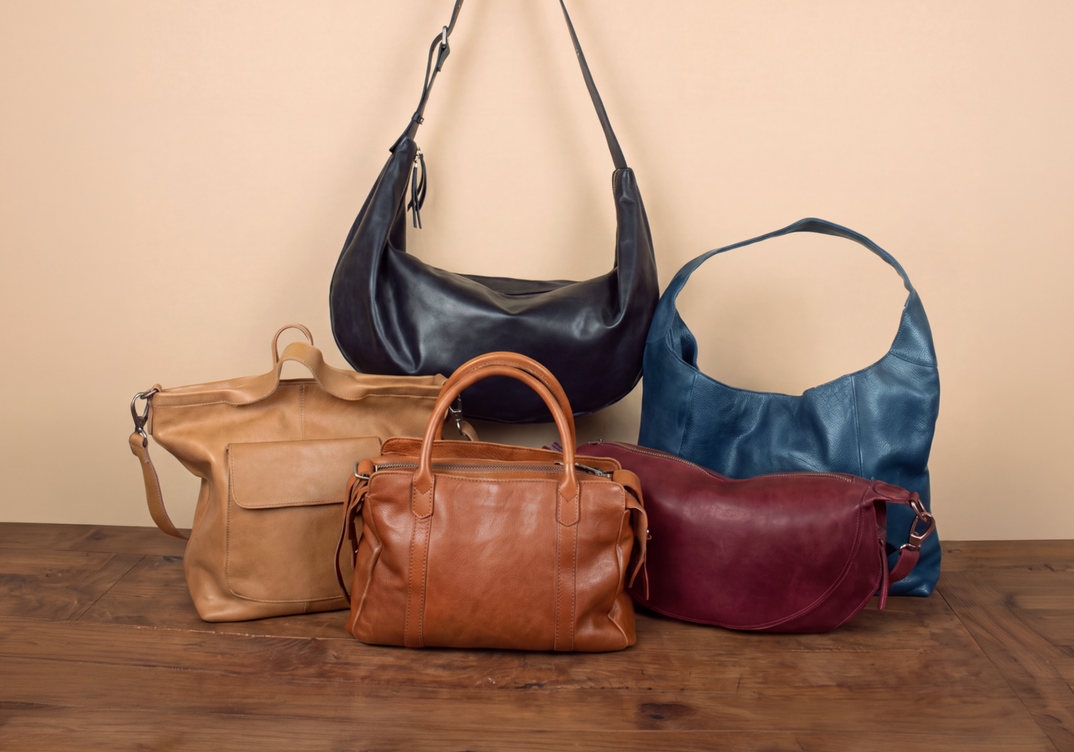
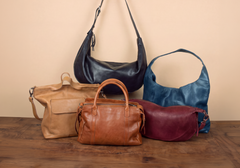
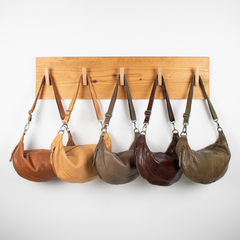
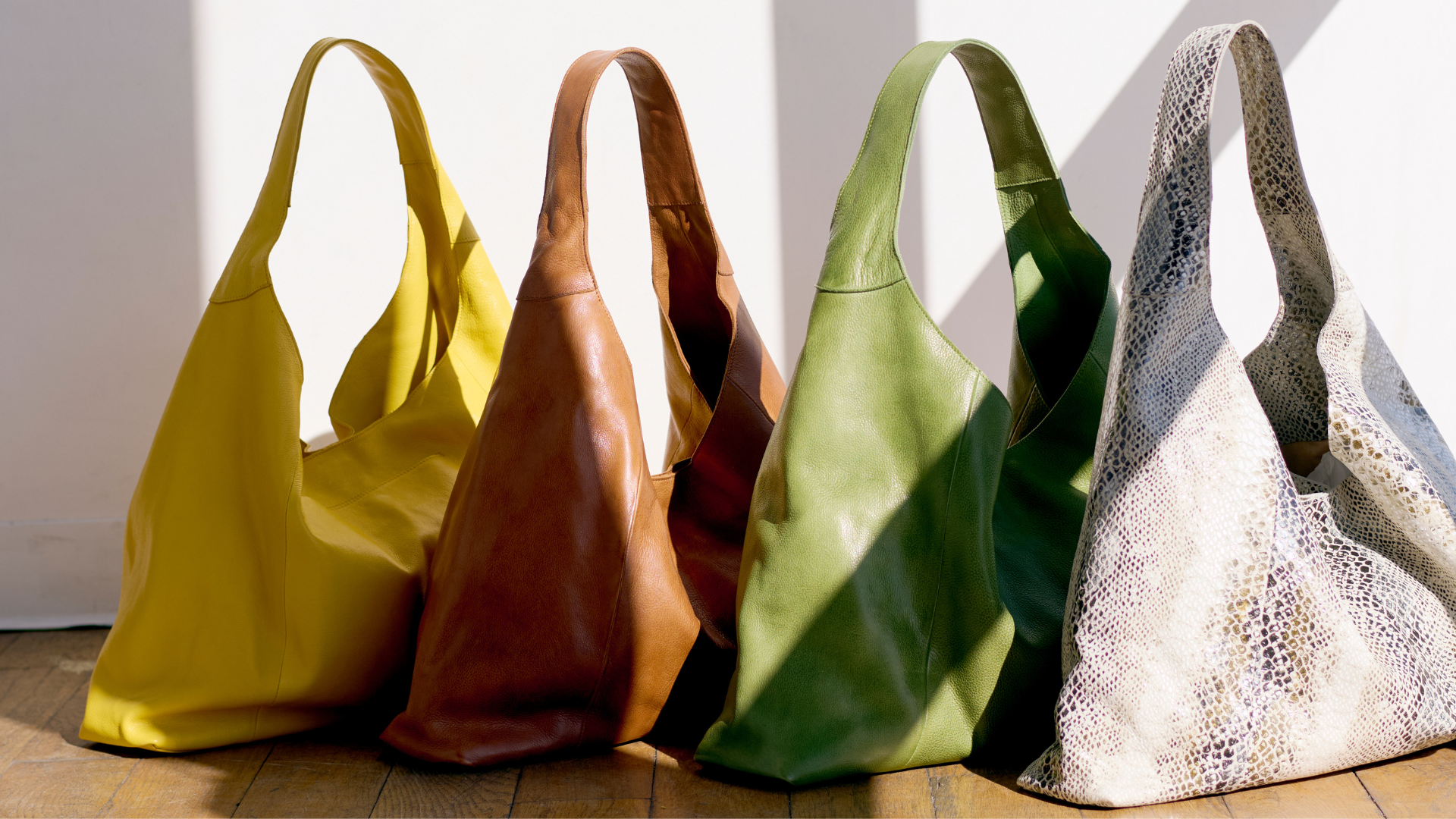
A hobo bag is a soft, unstructured handbag with a crescent or half-moon shape, a single long shoulder strap, and a relaxed slouch when you set it down. It's the toss-everything-in silhouette, the kind of roomy, carry-your-whole-day shape you'll find across our leather hobo bags.
This guide covers what defines the style, where the name came from, how to tell a true hobo from its lookalikes, and how to choose one that improves with every year you carry it.
Defining Characteristics of a Hobo Bag
Four things make a hobo a hobo: the crescent silhouette, the soft construction, the single shoulder strap, and the slouch. Get all four and you have the real thing. Miss one and you're usually looking at a different bag wearing a similar outline.
Shape and Silhouette
The signature curve dips low in the middle and rises at the corners where the strap attaches. Worn on the shoulder, the bag hangs close to the body and settles into your side. Set it on a chair and it folds softly into itself.
That collapse is the defining trait. A structured bag holds its shape empty; a hobo relaxes the moment you put it down. The drape reads casual and effortless, which is exactly why the style works so well for everyday wear.
Materials and Construction
The slouch only happens when the material is soft and flexible enough to drape. Supple full-grain leather, suede, and soft canvas all fold gracefully. Stiff, heavily reinforced leather holds a rigid shape no matter how the pattern is cut, so it can never make a true hobo.
Construction matters as much as the hide. A soft lining, an unreinforced base, and seams that follow the curve let the bag collapse with some grace instead of losing its lines entirely. Our hobo styles are cut from full-grain leather for this reason: the top layer of the hide is soft enough to drape from day one, and it keeps getting softer with wear.

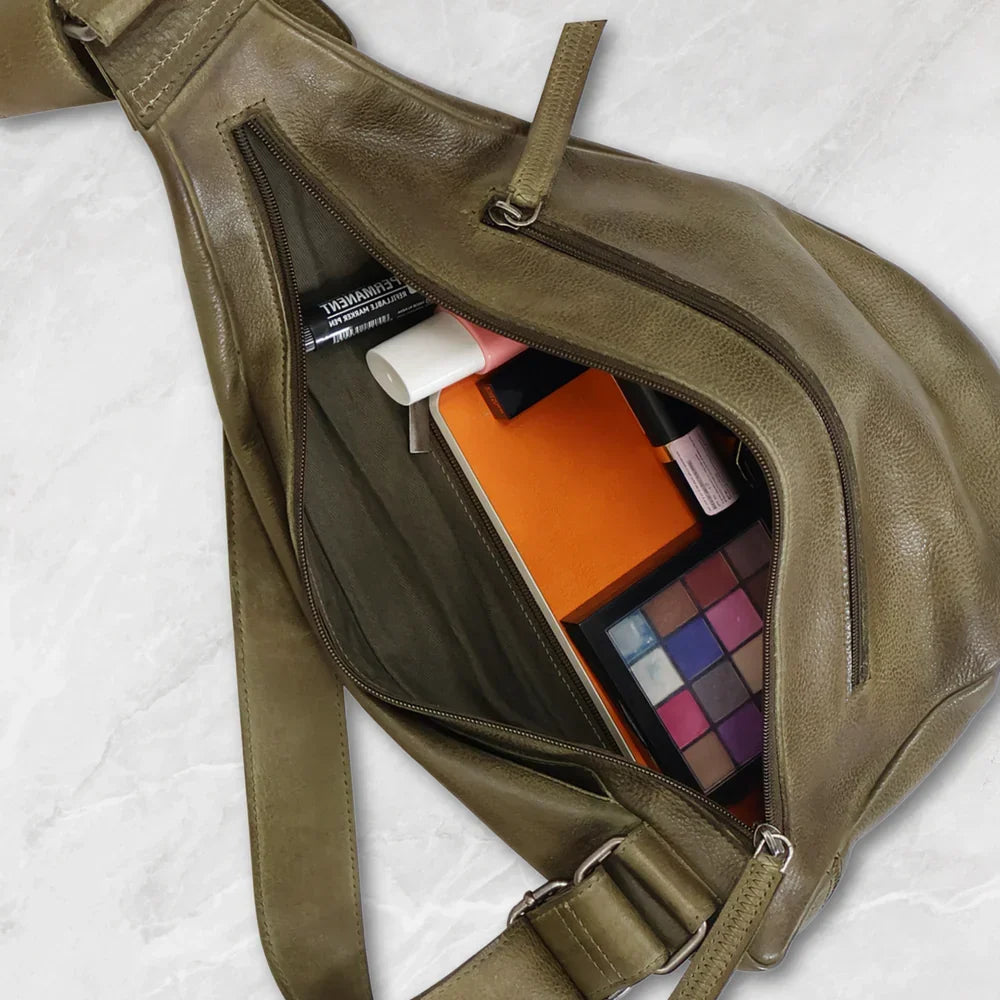
The Boone Crossbody Hobo Sling shows the construction in action. The buttery full-grain body settles into the crescent shape the moment you sling it on, with enough natural structure to keep your essentials organized inside.
Straps, Closures, and Interior
A single longer shoulder strap is the default. The strap drop, meaning the distance from the top of the strap to the bag, determines how the slouch sits: a longer drop lets the bag hang and swing at the hip, while a shorter one tucks it under the arm.
Closures vary by design. Magnetic snaps keep the relaxed, easy-access feel. A top zip adds security for commutes and travel. Fully open tops appear on the most casual versions. Inside, most hobos pair one spacious main compartment with a zip pocket and a slip pocket or two, since the soft shape benefits from a little internal order.
Size Range
Hobos run from compact everyday sizes that hold a phone, wallet, and keys up to oversized carryalls with room for a tablet and a cardigan. Size changes the slouch, too. A small hobo drapes gently; a large one, half-filled, collapses into a deeper, more dramatic curve.
Why It's Called a Hobo Bag
The name traces back to the bindle: the cloth sack tied to a stick that traveling workers carried over the shoulder in the early twentieth century. Cartoonists turned that image into shorthand, and the slouched sack hanging off a stick looks remarkably like the crescent handbag we know today.
The silhouette entered mainstream fashion in the 1970s, when designer Bobby Breslau's unconstructed leather “Halston bag” made the soft, slouchy shape a status piece. The boho-chic wave of the early 2000s brought it roaring back, and the style has stayed in rotation ever since.
Hobo Bag vs. Other Bag Styles
Plenty of bags get called hobos that aren't, and the reverse happens too. The fastest way to sort them is to compare shape, structure, strap, and the kind of day each one is built for.

Hobo vs. Tote
A tote is structured, open-top, and carried by two handles in the hand or crook of the arm. A hobo is slouchy, usually closed, and worn on the shoulder with one strap. If your day involves a laptop, a folder, and things that need to stay flat and upright, the structure of our leather totes serves you better. If you want a bag that molds to your side while you run a full day of errands, the hobo wins.

Hobo vs. Shoulder Bag
Here's where the confusion lives: every hobo is a shoulder bag, but most shoulder bags aren't hobos. “Shoulder bag” describes how a bag is worn; “hobo” describes a specific slouchy, crescent-shaped member of that family. Our shoulder bag collection includes both.

The Roam Shoulderbag makes the contrast easy to see. It's soft full-grain leather, but the woven top handles and zip-top design give it a shape that stays put, which places it on the structured side of the family rather than the hobo side. For the full map of the category, our guide to shoulder bags walks through every branch.
Hobo vs. Crossbody and Bucket Bags
A crossbody has a long strap worn diagonally across the torso, keeping the bag secure and your hands free. Most crossbody bags are smaller and more structured than a hobo, built for travel days and hands-free errands. Hybrids exist: the Boone pairs a hobo's slouchy body with a crossbody strap, so the categories blur in the best way.
A bucket bag shares the hobo's soft materials but keeps a flat, round base and a taller, cylindrical body, usually with a drawstring. Both slouch a little; only the hobo collapses into a crescent.
|
Style |
Shape |
Structure |
Strap |
Best For |
|
Hobo |
Crescent, slouchy |
Unstructured |
Single shoulder strap |
Everyday, roomy casual carry |
|
Tote |
Rectangular, upright |
Structured, open-top |
Two handles |
Work, laptops, flat items |
|
Shoulder bag |
Varies |
Soft to structured |
One or two shoulder straps |
The broad category |
|
Crossbody |
Compact, varies |
Usually structured |
Long diagonal strap |
Hands-free days, travel |
|
Bucket |
Cylindrical |
Soft body, flat base |
Shoulder or crossbody |
Casual carry with a base |
How to Choose a Hobo Bag
Start with your actual daily load, since the shape rewards honest packing. If you carry a phone, wallet, sunglasses, and keys, a compact hobo drapes beautifully and stays light on the shoulder. If your day includes a tablet, a water bottle, and a just-in-case layer, size up to a roomy silhouette that can swallow it all.
The Bree Diamond Leather Shoulder Bag sits in that everyday sweet spot: a soft, slouchy body roomy enough for the full-day load, with a strap that handles a day out.
Material is the next call. Full-grain leather softens and develops a patina, the rich surface character that quality leather earns with years of handling, so the bag looks better at year five than it did new. Suede brings a velvety hand and a more casual read. Canvas and vegan alternatives cost less up front, though they age by wearing down rather than wearing in. Our full-grain vs. top-grain guide explains what separates the grades.
Think about closure and organization, too. A slouchy, open-leaning shape benefits from a zip top if you commute on transit, and an interior zip pocket keeps small essentials from settling to the bottom of the curve.
Finally, check the details that separate a well-made hobo from a cheap lookalike: solid hardware, tight and even stitching, and the leather grade itself. The leather grade is the standard we've built every bag around since 1984.
Strap comfort matters more on a hobo than on most bags, since the whole load rides one shoulder. Look for a strap wide enough to distribute weight and a drop length that lets the bag sit at your hip, where the slouch looks and carries best.
How to Wear and Style a Hobo Bag
The relaxed silhouette reads laid-back by nature, which makes it one of the easiest bags to style. It's the natural finish for jeans and a good tee, a linen dress on a warm afternoon, or the boho layers the shape has always belonged to.
It also dresses up further than people expect. A hobo in a deep, saturated leather over a blazer and tailored trousers softens a work look without undoing it, the kind of pairing that carries from the office straight to dinner.
A few pointers keep the styling simple:
-
Cognac, tan, and brown leather pair with nearly everything and patina the most visibly over time
-
Black reads sleeker and leans the slouch toward polished
-
Let the bag hang at the hip; a crushed-under-the-arm hobo loses the line that makes it
Caring for a Leather Hobo Bag
The care goal with a hobo is preserving the curve. Store it stuffed with tissue paper or a soft scarf so the crescent keeps its shape between carries, and give it a spot on a shelf rather than a hook, which pulls the strap. Our guide to storing leather bags covers the full routine.
Condition full-grain leather a couple of times a year with a quality leather conditioner to keep it supple, and wipe it down with a soft dry cloth as needed. Suede asks for a different kit: a suede brush for the nap and a suede-specific protectant, with no creams or oils.
Choosing a Hobo That Ages Into Its Slouch
A hobo bag comes down to four markers: the crescent shape, the soft unstructured body, the single shoulder strap, and the slouch when it lands on a chair. Everything else, from size to closure to color, is a choice about how you live with it.
The material decides how those years go. A soft full-grain hobo drapes right from the first carry, softens with every one after, and builds a patina that makes it distinctly yours. Pick the size your real day requires, a strap drop that sits at your hip, and leather that improves with the miles.